Posts By Frederik
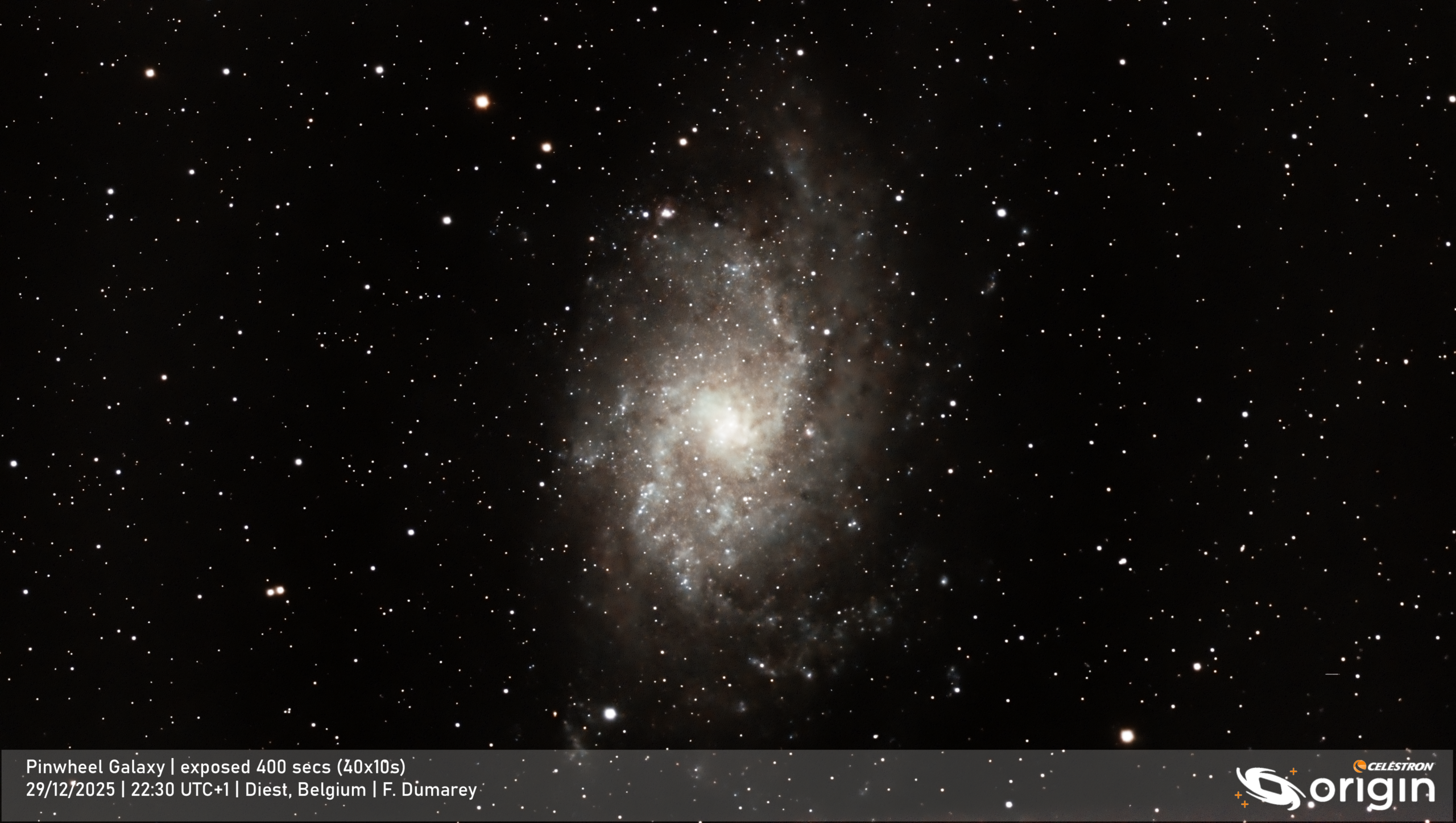
Pinwheel Galaxy
The same day I went for something less known and more challenging.
I started the goto function and went to the object I was not used and capable to see before with my old gear: the Pinwheel Galaxy.
I made 40 images with an exposure time of 10 seconds, with an ISO of 1000, and let the autostacker and derotater do their work.
Hereafter I also used PhotoShop CS6 to make some small adjustments on curves, levels and color balance to get the result mentioned in the post.
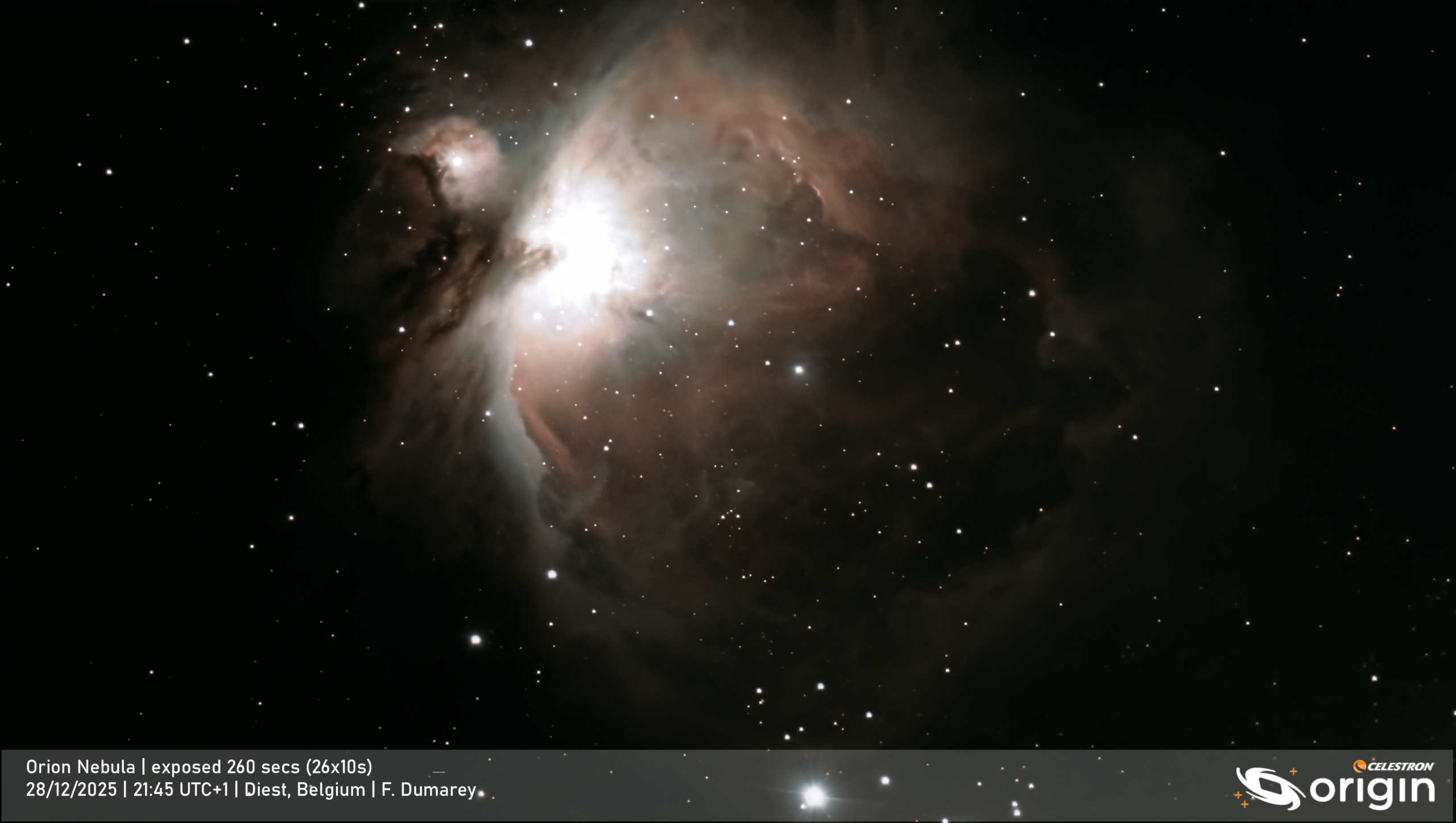
First light | Orion Nebula
The first light with my new setup.
After letting the scope do its initialization, plate solving and autofucus, I started the goto function and went to the object I knew the best: the M42 Orion Nebula.
I made 26 images with an exposure time of 10 seconds, with an ISO of 1000, and let the autostacker and derotater do their work.
Hereafter I used PhotoShop CS6 to make some small adjustments on curves, levels and color balance to get the result mentioned in the post.
I will also put all my posts in the Image Gallery.
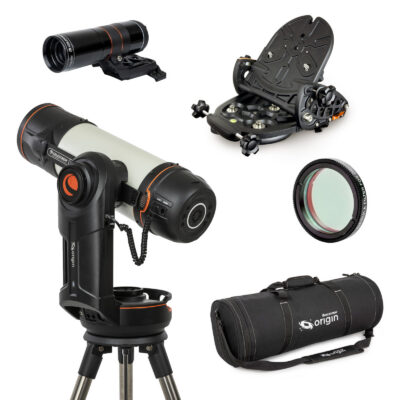
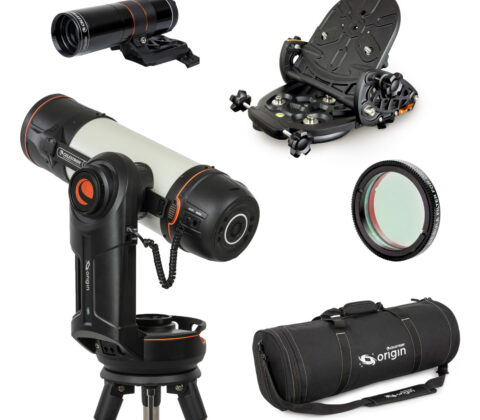
A new Astrophotography setup
First imaging with my new gear: the Celestron Origin mark II.
After installing, powering on, autofocus, plate solving I was ready to image the first celestial objects. My first choice was the Pleiades, but it was a bit misaligned and the scope was not yet at the right temperature. I got more success with the second object: Messier 42 aka the Orion Nebula. After some images, I let the stacking and derotation of the Celestron do its work and downloaded the master image. Since I was so excited I also managed to add a second object in this session: the Pinwheel Galaxy. You will find the results of my first lights in upcoming posts.